A medium by BREAKFAST
Flip-Disc Art
Thousands of physical discs, flipping in unison — no screens, no projectors. Flip-Disc artworks by BREAKFAST turn a half-century-old display technology into living, breathing kinetic sculpture.
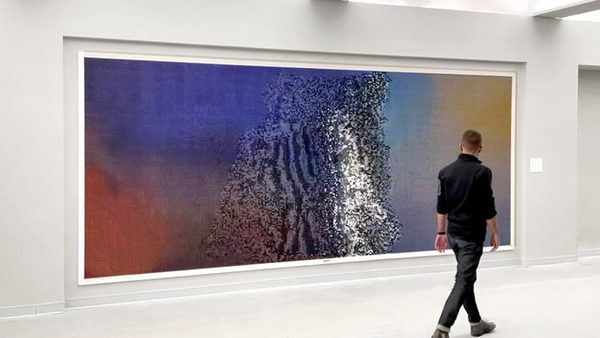
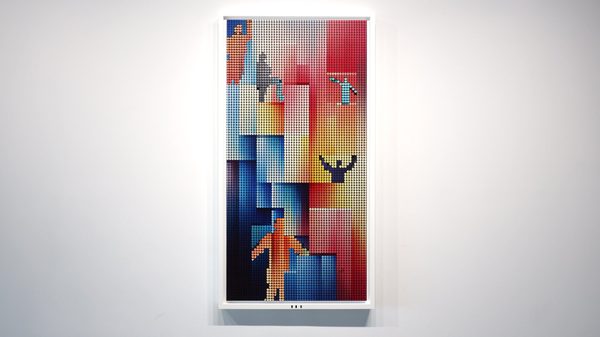
BREAKFAST has created the largest body of flip-disc art in the world: over 350 works and editions, which have appeared everywhere from private homes to Harvard University, Rockefeller Center, and the Venice Biennale.
What is a flip disc?
A flip disc — sometimes called a flip dot — is a small disc (with an embedded ferrite chip) mounted on an axle beside an electromagnetic coil. Pulse the coil one way and the disc flips to show one face; pulse it the other way and it flips back. Crucially, the disc stays where it lands without using any power. An image built from flip discs is a physical object, not a glowing screen: it holds still in silence, then erupts into motion.
The technology was invented for signage — train station boards, bus destination signs, stock tickers — where its readability and near-zero power draw made it ideal. For decades that's all it did: spell out arrival times, one clattering row at a time.
How BREAKFAST turned a sign into an art form
BREAKFAST began experimenting with electromagnetic displays in 2012, when he and his engineers rebuilt the driving electronics and software and made the discs flip dramatically faster — going from their normal 4–5 fps to over 40 fps, fast enough for fluid, video-like motion. A display technology became a medium.
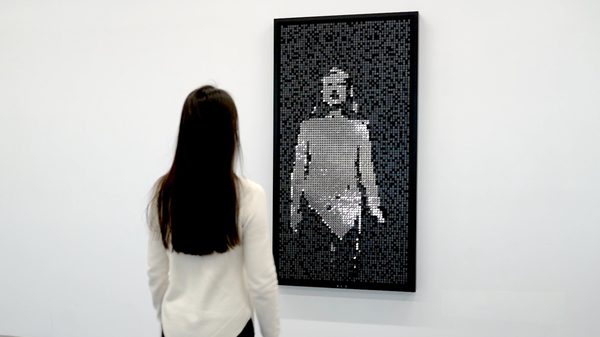
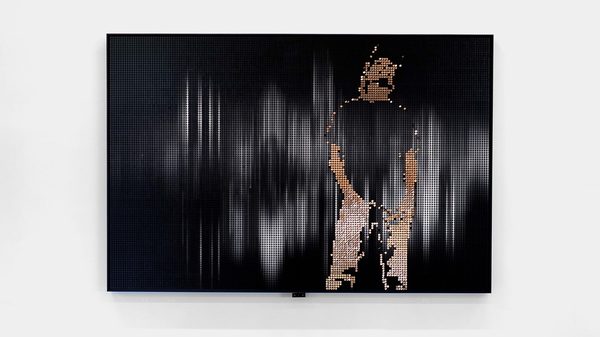
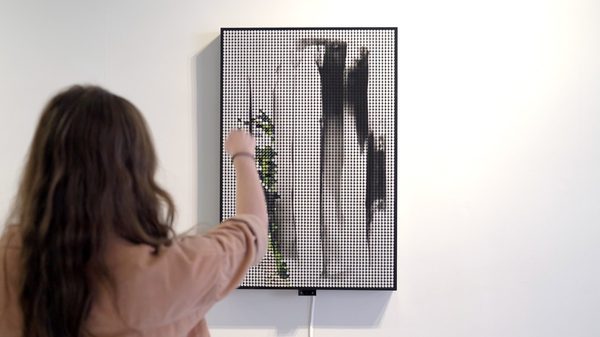
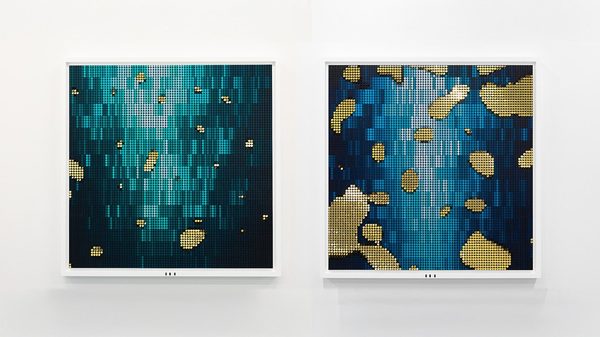
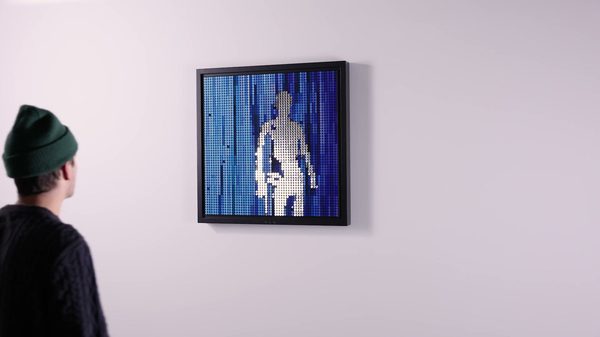
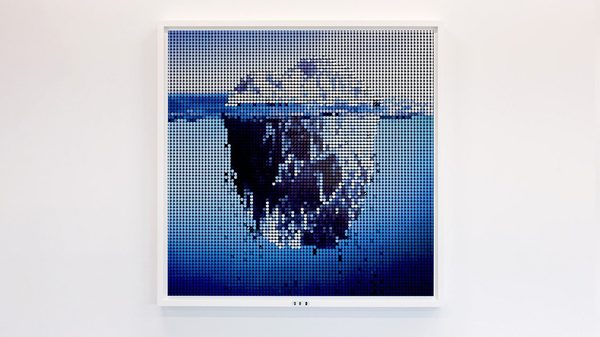
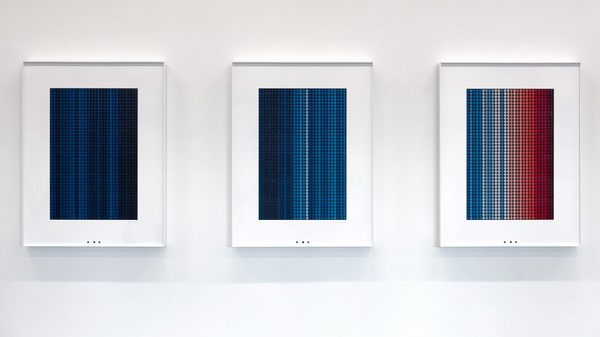
Today every flip-disc artwork is designed and built end to end at BREAKFAST's studio in the Brooklyn Navy Yard: custom circuit boards, proprietary software, and thousands of individually addressed discs. A signature of BREAKFAST's pieces is their mixing of kinetics, real-time data visualization, and interaction. Most of his flip-disc pieces visualize live data — ocean temperatures, river oxygen levels, disappearing forests, the movement of a city — and become interactive upon someone walking up to them.
Flip disc or flip dot?
Both names describe the same mechanism. Flip dot is the older, industrial term from the signage world. BREAKFAST adopted and holds the copyright of Flip-Disc for the re-engineered version at the heart of these artworks — custom prints and finishes like gold, copper, and mirrored silver, far faster refresh rates, and disc-level control designed for art rather than announcements.
Where the work has traveled
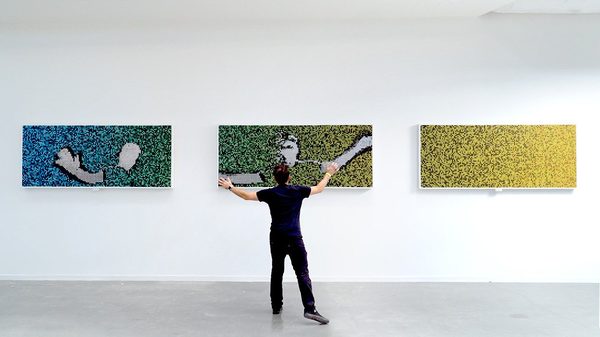
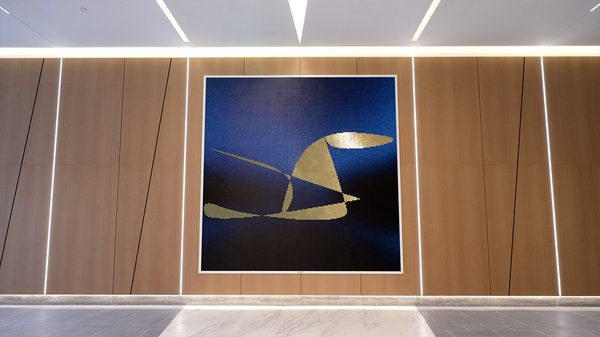
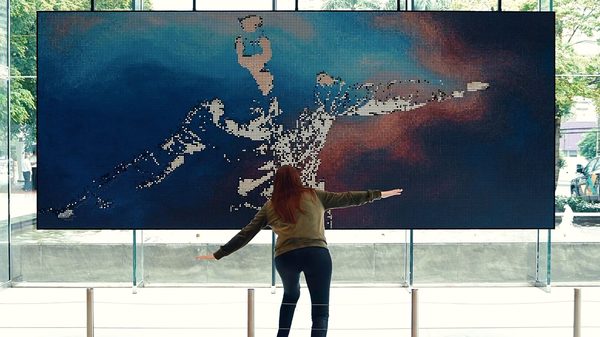
There are over 350 Flip-Disc works by BREAKFAST that have been purchased or commissioned around the world. Interwoven Existence became the first interactive kinetic artwork shown at the Venice Biennale in 2024. Time Capsule Over Manhattan was commissioned in 2024 as a permanent work for Rockefeller Center. Harvard Time Capsule has greeted students since 2020, and Traverse — sixteen feet wide — set the template for the interactive lobby installations now found in corporate headquarters and hotels worldwide.
Alongside the landmark commissions, BREAKFAST creates collector editions — intimate flip-disc works sized for homes and private collections, each one a fully functional kinetic machine with the same electronics as the large-scale pieces.
Selected flip-disc works
Flip-Disc questions, answered
- What is a flip disc?
- A small physical disc that flips between two faces when pulsed by an electromagnet — and stays put without power. Artworks are built from thousands of them, each individually controlled.
- What's the difference between flip discs and flip dots?
- Same mechanism, different eras. "Flip dot" is the transit-sign term; "flip disc" is BREAKFAST's re-engineered, art-grade version — faster, finished in materials like gold and mirror silver, and driven disc-by-disc for fluid motion.
- How do the artworks respond to people?
- Many works can see the space in front of them via a depth array sensor. Software translates what the piece senses — a silhouette, a wave, a crowd — into motion across the discs in real time; nothing is recorded or stored. Other works render live data feeds: tides, temperatures, rivers, city movement.
- Do they make sound?
- A soft, rain-like patter as discs flip. It's part of the work's presence — composed, not incidental.
- Can I own one?
- Yes — from intimate collector editions to landmark commissions. See what's currently available or start an inquiry, and someone from BREAKFAST's team will be in touch.
Beyond flip-discs
Flip-Discs are one of many kinetic mediums invented by BREAKFAST. Explore Brixels — rotating physical pixels in marble, mirror, and metal — learn what makes it all kinetic art, see how the interactive works respond to people, or browse every work in one place.