The art form, explained by BREAKFAST
Kinetic Art
Kinetic art is art that moves — sculpture whose medium is motion itself. No screens, no projections: real, physical material set in deliberate, controlled movement.
BREAKFAST is a kinetic artist working from the Brooklyn Navy Yard in New York. Since 2009 he has created more than 400 kinetic artworks installed around the world, including The Pearl, the world's largest kinetic sculpture, and the first interactive kinetic artwork shown at the Venice Biennale.
What is kinetic art?
Kinetic art is any artwork that depends on real movement for its effect. Where a painting holds one moment and a video loops a recording, a kinetic sculpture is a machine built to perform — its composition changes second by second, driven by motors, magnets, wind, or gravity. The motion is the material.
That physicality is the whole point. A kinetic piece occupies the room the way a person does: it has weight, makes sound, catches light differently as it moves. Watching thousands of physical elements move in coordination triggers something a screen never will — the understanding that what you're seeing is actually happening.
A short history — from Calder to code
The form has roots in the early twentieth century — Marcel Duchamp's spinning bicycle wheel, Alexander Calder's air-driven mobiles, Jean Tinguely's self-destructing machines, and the op-kinetic experiments of artists like Yaacov Agam and Jesús Rafael Soto. For most of that century, kinetic art moved however physics happened to move it: wind, motors, chance.
The current generation changed the source of the motion. Today's kinetic art can listen — to live data, to weather, to the people standing in front of it — and move in response. This is where BREAKFAST works: sculpture whose movement is continuously composed by software, translating the invisible forces of the world into physical motion.
How BREAKFAST makes kinetic art
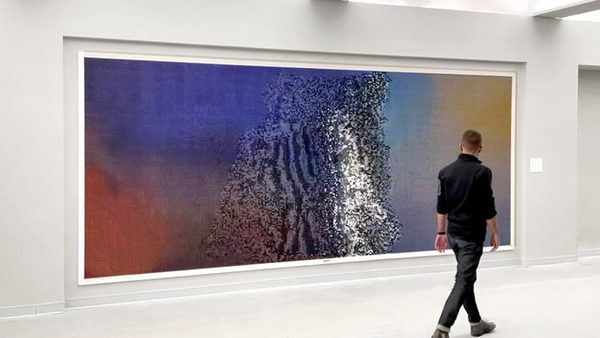
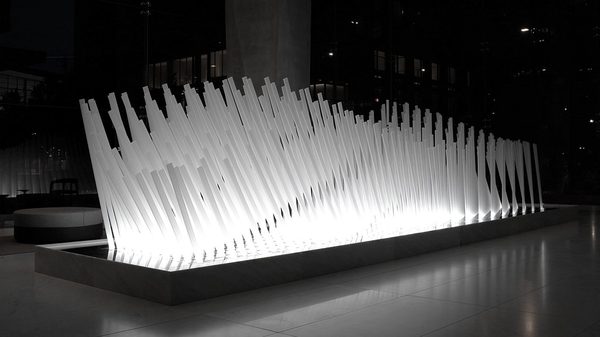
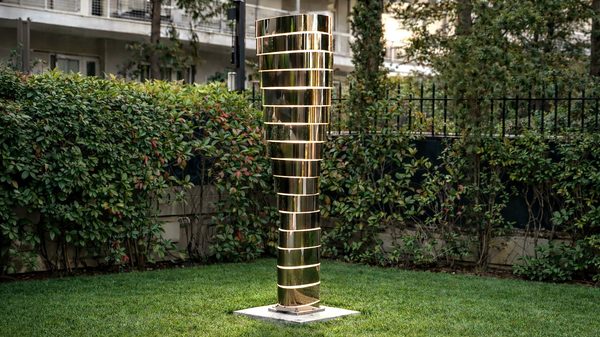
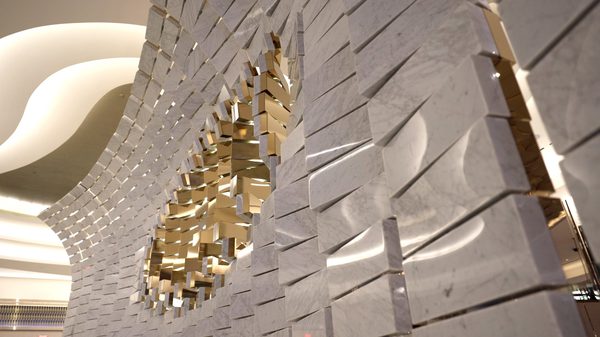
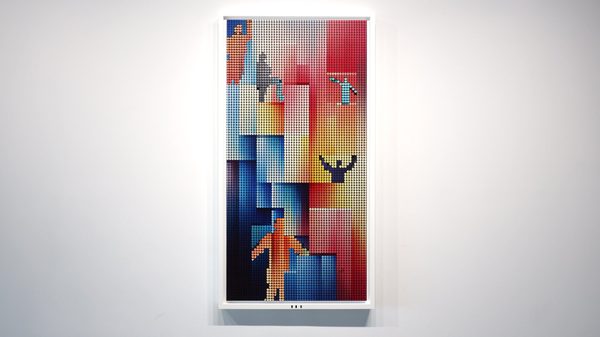
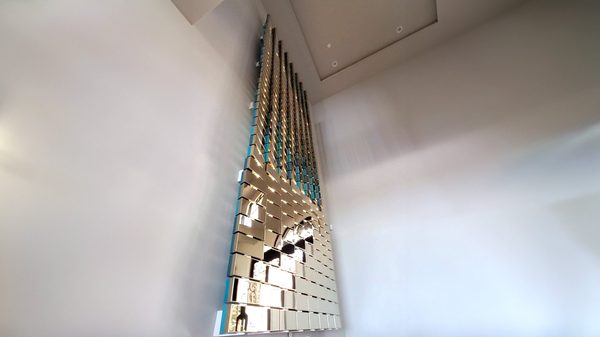
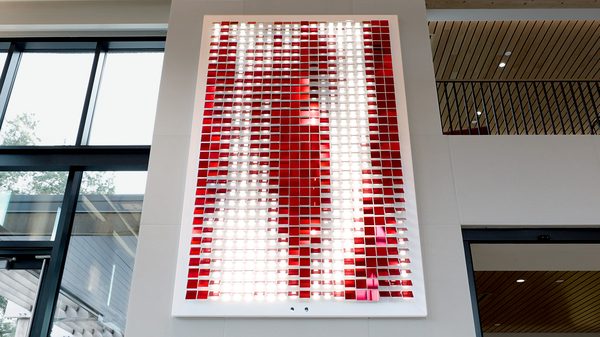
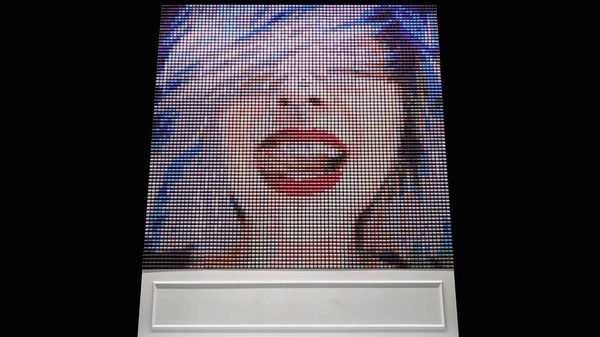
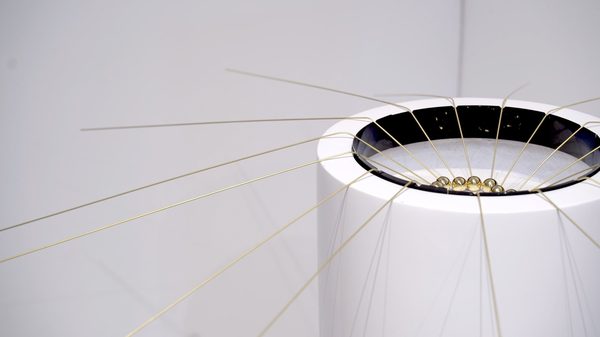
BREAKFAST has invented seven kinetic mediums, each one an original mechanical system designed and built end to end at his studio in the Brooklyn Navy Yard. Flip-Discs — thousands of electromagnetic discs flipping at over 40 frames per second. Brixels — motorized, brick-scale pixels faced in marble, mirror, and metal. Wind Tiles, Sway Tiles, Reeds, and Rings extend the vocabulary further, each with its own physics and presence.
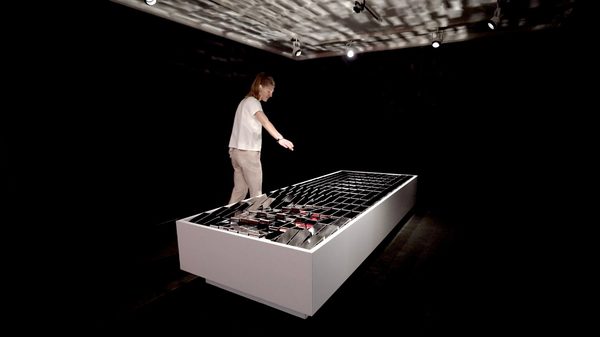
Nearly every piece is connected to the world in real time. Cedar Point Reeds in Denver sways with live wind data from a wind farm eighty miles away. Oceans at Fontainebleau Las Vegas renders the movement of the sea. Many works are also interactive — sensing viewers through a depth array sensor and folding their silhouettes into the motion.
Kinetic art in homes, lobbies, and landmarks
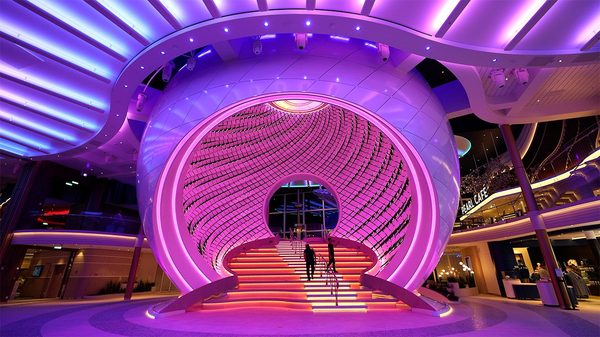
Kinetic art scales. BREAKFAST's collector editions are intimate kinetic wall art sized for homes — fully functional machines with the same electronics as the landmarks. Statement pieces anchor lobbies, hotels, and headquarters, where a moving artwork does what no static piece can: it makes a space feel alive, and it stops people mid-stride. At the far end are architectural commissions — The Pearl, a kinetic sphere four stories tall; Time Capsule Over Manhattan, commissioned in 2024 as a permanent work for Rockefeller Center.
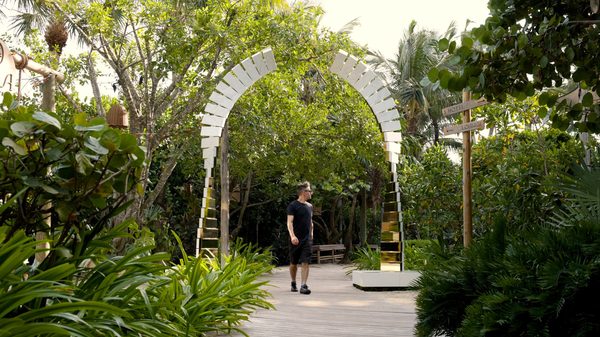
One work so far lives outdoors — Athens Gusts, rotating rings above a street in Greece — with the rest engineered for interior spaces of every scale.
Selected kinetic works
Kinetic art questions, answered
- What is kinetic art?
- Art that depends on real, physical movement. Instead of paint or pixels, the medium is motion itself — discs flipping, blocks rotating, stalks swaying — produced by mechanics rather than a screen.
- What is the difference between kinetic art and interactive art?
- Kinetic art moves; interactive art responds. Many of BREAKFAST's works are both — kinetic sculptures that sense a viewer through a depth array sensor and change their motion in response.
- How much does kinetic art cost?
- BREAKFAST's collector editions begin in the low five figures; larger statement pieces and architectural commissions range from six figures into the millions, depending on scale and site. The catalog lists current prices for available works.
- How do I buy or commission a kinetic sculpture?
- Browse what's currently available, or start an inquiry for a commission — someone from BREAKFAST's team will be in touch.
- Does kinetic art require maintenance?
- The pieces are engineered for continuous daily operation and connect to the studio for remote monitoring and tuning. BREAKFAST's team supports every installed work.
Go deeper
Explore the mediums behind the work — Flip-Discs and Brixels — see how the interactive works sense and respond, learn how live data drives the motion, or browse every piece in one place.