The art form, explained by BREAKFAST
Data Art
Data art gives the invisible forces of the world a physical form. In BREAKFAST's work, live data — ocean temperatures, wind, carbon emissions, disappearing ice — drives real mechanical motion. No screens, no dashboards: the state of the planet, rendered in moving sculpture.
BREAKFAST has been making data-driven kinetic art since 2012. Most of his 400+ works are connected to a live feed, from collector editions tied to a single stretch of coastline to landmark installations moved by wind farms eighty miles away.
What is data art?
Data art is art whose form is shaped by real information about the real world. Instead of paint deciding a composition, a dataset does: the height of a tide, the speed of wind over a city, the oxygen level of a river, the shrinking outline of polar ice. The artist designs how the data will express itself; the world supplies the performance.
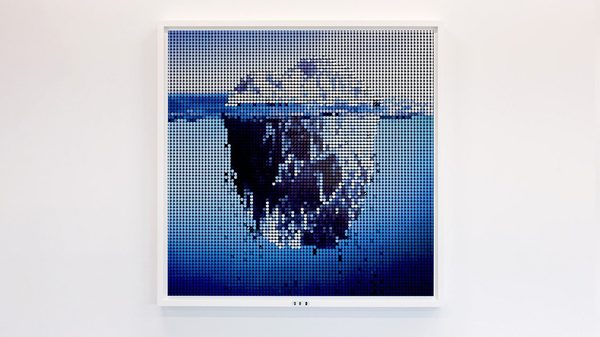
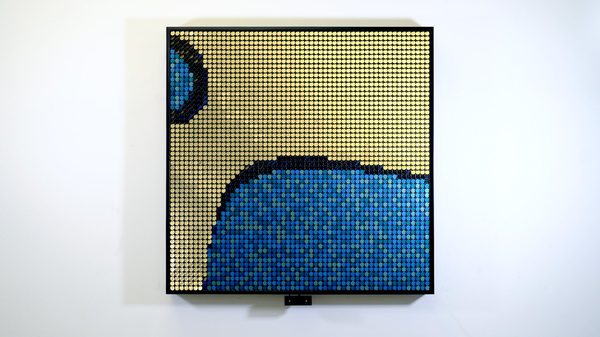
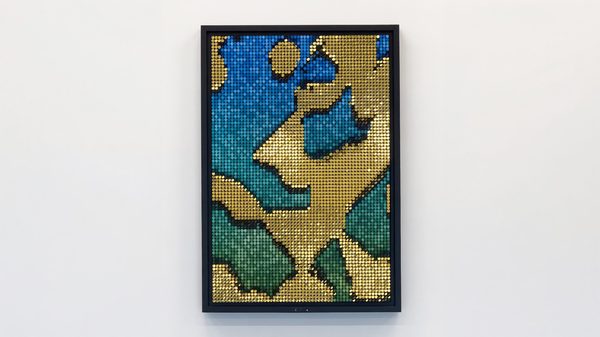
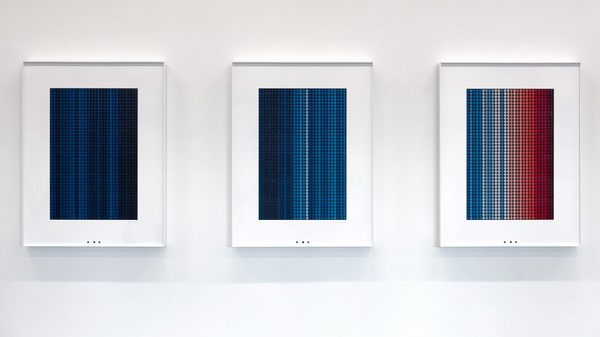
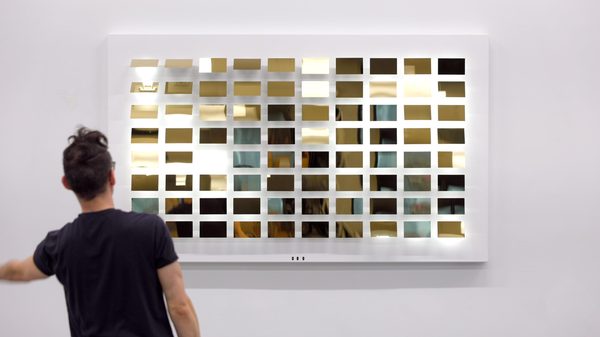
Most data art lives on screens — charts made beautiful, projections in dark rooms. BREAKFAST's version is different in kind: the data drives physical kinetic sculpture. When Antarctic ice retreats, thousands of discs physically flip. The abstraction of a dataset becomes something with weight, sound, and presence — and that makes it land differently. You don't read it; you feel it.
How live data becomes motion
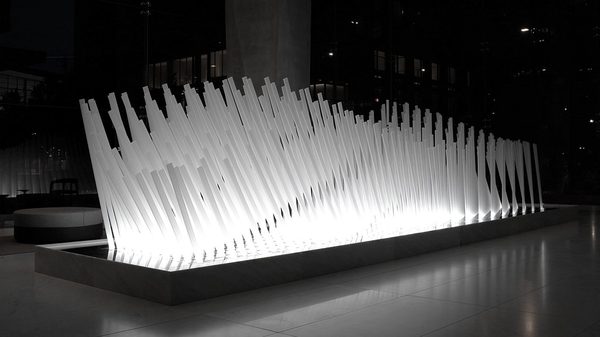
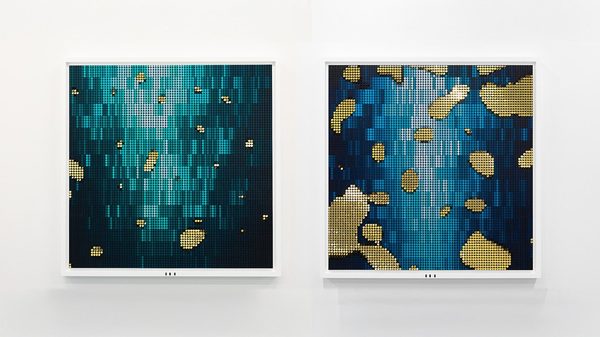
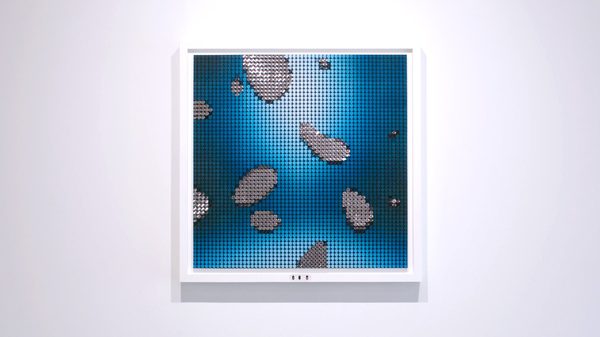
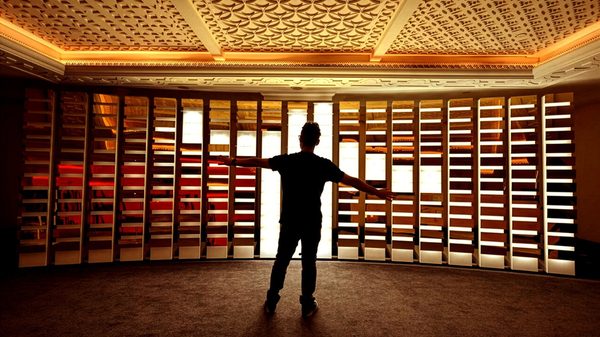
Each work maintains a connection to its source: NOAA ocean buoys, weather stations, wind farms, river monitors, climate datasets. Software written at BREAKFAST's studio interprets the incoming feed and continuously composes the sculpture's motion from it — not a looping animation, but a live rendering of now. Cedar Point Reeds in Denver sways with the actual wind crossing a wind farm eighty miles east. Aspri Limni Tide breathes with the rhythm of a specific stretch of Mediterranean sea.
Because the source is live, a data artwork is never the same twice. A collector who lives with one describes it less like owning an image and more like living with a window — onto a river, an ocean, a warming pole.
Data with a subject
Much of BREAKFAST's data work carries an environmental throughline. Antarctic Ice and Longyearbyen Warming track the fastest-changing places on Earth. Vanishing Forest renders deforestation as it happens. Carbon Wake and the Warming Seas series translate emissions and ocean heat into motion you can stand in front of. The point is not alarm — it's attention. Data that would scroll past in a feed becomes something a room lives with every day.
Not all of it is climate. Works have rendered the movement of cities, markets, and rivers — any force that leaves a trace in numbers can drive a piece.
Data art for collectors and spaces
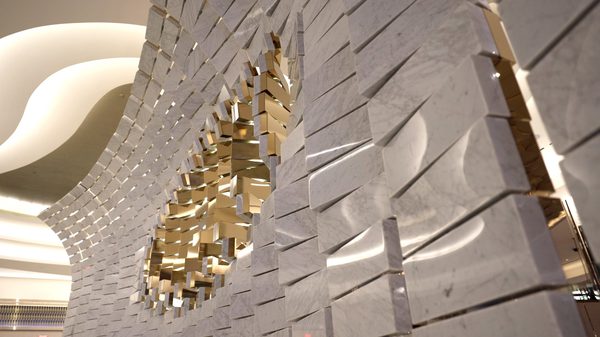
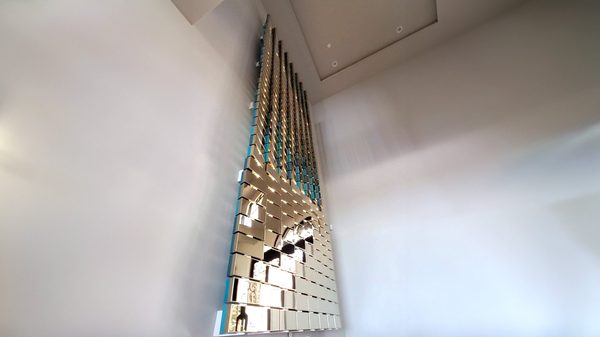
Because the medium is the data connection, data art scales from intimate to architectural. Collector editions bring a live feed into a home. Statement pieces give lobbies and headquarters an artwork that is genuinely never static. Commissions can be tied to data that means something to the place — the sea outside a coastal home, the wind over a city, the river a building overlooks.
Selected data-driven works
Data art questions, answered
- What is data art?
- Art whose form is shaped by real data. In BREAKFAST's work the data is live and the result is physical — a sculpture whose motion is continuously composed by ocean temperatures, wind, carbon levels, or the movement of a city.
- Where does the data come from?
- Public scientific and environmental feeds: NOAA ocean buoys, weather stations, wind farms, river monitors, climate datasets. Each work connects to its source over the internet and updates continuously.
- Is it updating in real time?
- Yes. The works render what is happening now — today's tide, this hour's wind, the current state of Antarctic ice. A data artwork is never the same twice, because the world it reflects never is.
- How is data art different from generative or AI art?
- Generative art invents its patterns; data art inherits them from the real world. BREAKFAST's works are also physical machines rather than images — the data drives thousands of mechanical elements, not pixels.
- Can I choose the data my piece responds to?
- Often, yes. Collectors commission works tied to places and forces that matter to them — the sea outside a family home, the wind over a city, a river. Start an inquiry and someone from BREAKFAST's team will be in touch.
Go deeper
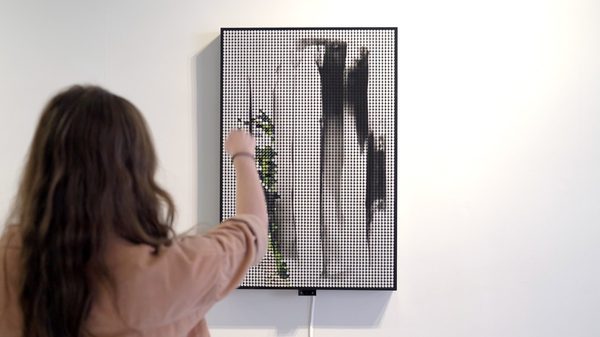
See what makes the work kinetic art, how the interactive pieces respond to people, the mediums themselves — Flip-Discs and Brixels — or browse every piece in one place.